
Hello! In this week blog post, I will be discussing about the Uses and Gratifications theory, which was introduced by Bulmer and Katz.
This theory suggests that people uses the media for five different reasons:
- For information and education — e.g. TV broadcasts, newspapers, documentaries, latest trends, etc.
- The media becomes our source of information, where we gain and acquire knowledge about the world. It keeps us updated and benefit us in certain ways.
- For instance, watching the weather forecast on television channels, listening to weather reports on radio.
- For entertainment purposes — e.g. random memes and comedy videos, etc.
- The media keeps us entertained, making us less bored during our free time.
- For identity — e.g. looking up to certain idol, actor, influencer, etc.
- The audience are able to find their role models, or people who have similar beliefs or attributes as them.
- For integration and social interaction — e.g. conversation starter, strengthens friendship, etc.
- A group of audience watching a TV show together can bond them, especially when they all share similar interests.
- For escapism — e.g. video games, fantasy shows, etc.
- The audience uses the media as a form of distraction, or as a form of relaxation. Some audience will think that the fictional world in media is much better than the real world. Hence, making it a form of escape from reality.
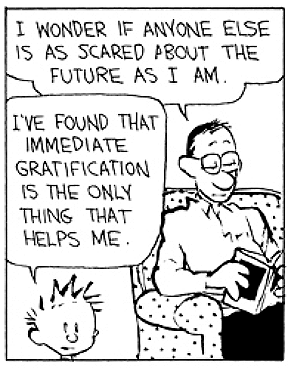
Everyone uses media for their own benefit. Some use it to kill time or as a form or distraction, while some use it to entertain themselves to get away from the harsh reality that we lived in. The usage of media is so significant that it became part of our everyday lives. This is closely related to the Maslow’s Hierarchy of Needs.

source: https://www.simplypsychology.org/maslow.html
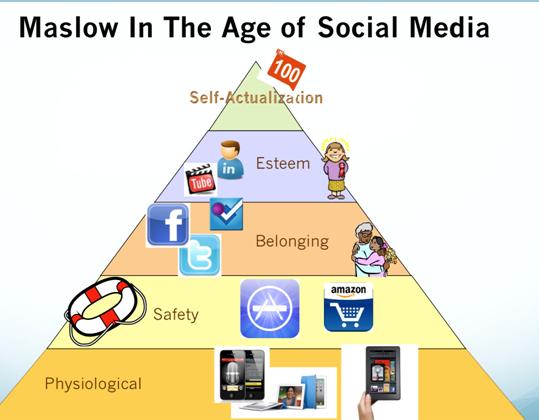
Unlike the previous theories that we learned on how the media affects us, the Uses and Gratification theory focuses on the audience’s viewpoint. It shows how we make use of media and how we input it into our daily needs. For example, some people find love and belongingness online. One swipe on tinder and you will find yourself a lover (if you’re lucky of course). Also, a fan base group online can let you make friends with people who share a similar interest. There are so many different examples on how the media changes the way we live in throughout the years. Are there any media influencers online 20 years back? No. In this day and age, there are so many influencers all over the world. An example will be Kylie Jenner, who is one of the highest paid Instagram influencer and is sponsored by many companies. One post on Instagram and she earns countless bucks. The fact that she have so many audience, it shows how much power she have in influencing people’s buying habits. Some audiences trust influencers more as they claimed that they are more authentic than advertisements. Perhaps the reason is because the audience feels a connection between them and the influencers.

What is Lobbying?
Here’s a fun fact. How did the word “lobbying” came about?
Back in the 17th century, the people in England wanted to influence the members of the Parliament. They stood outside the lobby of the parliament, hoping that they will be able to communicate with the members of Parliament. In this day and age, lobbyists have the same motive, hoping to get their messages across to the Parliament.
At the present time, there are many interest groups that aim to advocate the public on a particular matter. These groups are represented by a social cause, religious or idealogical interests, etc.

source: https://aldf.org/article/recap-california-humane-lobby-day-2019/
The picture above was taken from the Animal Legal Defense Fund website.
At a denotative level, this is a photograph of lobbying taking place. This picture looks like it was taken at the lobby of the Parliament or court. There are many people holding up banners, supporting animal rights. There are also two ladies without banner, dressing more formally than the rest. At a connotative level, this picture might be taken by reporters, as this look like a big event. The people in this picture look happy, which shows that they are enthusiasts. The two ladies dressed in formal attire look like they are the higher ups, probably the lawyers or the CEO representing the Animal Legal Defense Fund. It also looked like an agreement was made, something beneficial for this lobby group as they all look like they are celebrating. At a mythic level, this group of people are animal activists who hope that other people will be influenced by them to do the same. They hope that more people will join the Animal Legal Defense Fund to protect animals at all costs.
The Animal Legal Defense Fund files lawsuits to protect animals from harm and send emails and letters to politicians to advocate pro-animal measures. They also educate the public in seminars and workshop to convey their mission.
Here is a video by the Animal Legal Defense Fund.
The Animal Legal Defense Fund hopes to gain awareness from the public on animal cruelty issue. They hope that people can help in different ways, be it donating or writing letter to their state legislators to appeal for animal rights.

source: https://aldf.org/about-us/
To conclude, lobby groups are important as they have the power to influence and also win the public’s opinion. However, there are also down sides to lobbying. If one is easily influenced, interest groups with bad intentions will be able to influence and promote opposing easily. Therefore, it is important for us to be vigilant with the information we get, as what we support will ultimately shape our future.
Thank you for reading! 🙂
References
https://www.oxfordbibliographies.com/view/document/obo-9780199756841/obo-9780199756841-0132.xml

 jy
jy 
Hi JY, our approach in explaining the “Uses and Gratifications” research is similar to mine. Your post was paragraphed and well-elaborated. I am better able to understand the purpose of the Animal Legal Defense Fund from your post. Perhaps, are you an animal lover like some of our coursemates? I concur with your concluding thought that if some of the audiences are easily influenced by extremist, it will lead to detrimental effects. Schools have already begun teaching students on differentiating the credibility and reliability of sources on whether they have hidden intentions. However, I believe more needs to be done in educating the public in an era of information explosion.
LikeLike
Edit: Hi JY, your approach in explaining the “Uses and Gratifications” research is similar to mine. Your post was paragraphed and well-elaborated. I am better able to understand the purpose of the Animal Legal Defense Fund from your post. Perhaps, are you an animal lover like some of our coursemates? I concur with your concluding thought that if some of the audiences are easily influenced by extremist, it will lead to detrimental effects. Schools have already begun teaching students on differentiating the credibility and reliability of sources on whether they have hidden intentions. However, I believe more needs to be done in educating the public in an era of information explosion.
LikeLike
**Edit: Hi JY, your approach in explaining the “Uses and Gratifications” research is similar to mine.
Hey JY, let me do a quick edit on my first sentence. Thank you.
LikeLike
Hi JY!!! It is a clear blog post that allows me to understand the theory better! The examples and explanations of the five reasons on why people use media are easy to understand. And it is good to add define what lobbying is before straightly go into the example of lobbying group.
I agree that lobby groups are important but also “dangerous”. They sometimes may be able to urge the government or the people to make changes or be aware of some issues but because of this powerful effect, problems may also caused. I don’t think we should fully trust anyone or any organization, including the government. We should have our own judgement before taking any action so that people with bad intentions will not be able to successfully influence us.
Looking forward to your next blog post!:D
LikeLike
Hello Jing Ying! Great blog post, allows me to easily understand “Uses and Gratifications”. I can see that we have the exact same reason that suggests why people usually use media, and I have to say I totally agree with it. Lets just use us as an example, we are also using media because of these five reasons, and as for me, I am definitely using media more for the entertainment purposes! I mean what is life without a little bit of entertainment
Interesting that you weighed both the pros and cons at the end of the blog post, and I have to say, I definitely did not think of how “lobbying” could work against us, and you are right, if people are easily influence, “lobbying groups’’ could be really dangerous, and in worst cases I feel that, if a lobby group is able to gather a substantial amount of people, they might even overturn the rule maker.
That is all I have for you, can’t wait to read your next blog post!
LikeLike